Fraud Blocker

Closing Day Guide for Massachusetts Homebuyers

Closing Day in Massachusetts: What to Expect as a Homebuyer

Closing day is when your new home officially becomes yours — but it’s also a process filled with critical steps, paperwork, and timing. This guide breaks down exactly what to expect on closing day in Massachusetts so you can move forward with confidence.

Home | Realvitalize | Closing Day in Massachusetts
ma new listings and coldwell banker logos

Closing Day in Massachusetts: What to Expect as a Homebuyer

Closing day is the final step in your home purchase journey – an exciting and sometimes nerve-wracking occasion when you officially become a homeowner. For Massachusetts homebuyers, including first-time buyers, move-up buyers, and downsizers, it’s important to know what to expect on closing day.

This guide provides a detailed, step-by-step look at the closing day timeline, the roles of all parties involved, how the final walk-through works, typical closing costs, documentation you’ll need, and common mistakes to avoid. With this knowledge, you can approach closing day with confidence and ensure a smooth, successful transaction.

massachusetts smoke detector

The Closing Day Timeline in Massachusetts

Closing day in Massachusetts typically unfolds in a series of steps leading up to the transfer of ownership. Here’s a general timeline of what happens on closing day :

  • Morning of Closing – Final Walk-Through: The final walk-through is your last opportunity to verify the home is in the condition you agreed to purchase it in.
    While many buyers schedule this the day before closing, I strongly recommend doing it the morning of closing, as close to the appointment as possible. This acts as a safeguard against any last-minute issues that could arise — such as a leaking toilet, broken appliance, burst pipe, heating or cooling failure, or even a window left open during a storm.
    The goal is to catch and address any new problems before funds are transferred and ownership officially changes hands. If you do the walk-through too early, unexpected issues can sneak in between the walkthrough and closing, leaving you responsible after the deal is done.(We’ll cover final walk-through tips in detail below.)
  • Closing Meeting – Document Signing: On closing day, you’ll meet with the other parties — typically at the closing attorney’s office, a title company, or occasionally the Registry of Deeds — to sign all the final paperwork.
    In Massachusetts, a licensed attorney conducts the closing and oversees the signing of documents with the buyer. While both the buyer and seller may attend, it’s very common for the seller to be absent, having granted their attorney power of attorney (POA) to sign on their behalf.
    If the seller is present, they will sign the deed in person. If they are not, their attorney may sign the deed using a recorded POA, which will be filed with the deed at the Registry of Deeds.
    As the buyer, you’ll review and sign all closing documents, including the mortgage note (if you’re financing the purchase) and the Closing Disclosure, which details all financial terms of the transaction.
  • Funds & Payment – Closing Costs and Disbursement: As the documents are signed, the financial side is finalized. The buyer’s lender will wire the loan funds to the closing attorney or escrow agent, and the buyer pays their share of the purchase price (down payment plus closing costs) via a wire transfer or certified bank check. Massachusetts closings are “wet closings,” meaning all funds must be available at the time of closing. Once all funds are in, the closing attorney will disburse payments: the seller gets the proceeds of the sale, real estate agents receive their commissions, and other closing fees are paid out.
  • Recording and Transfer – Finalizing the Sale: After all documents are signed, the closing attorney or title agent will arrange to record the deed (and mortgage, if applicable) with the local Registry of Deeds.
    Important: The transfer of ownership is not legally complete until the deed is recorded in the public records. In Massachusetts, this recording process often takes several hours after the signing. If your closing occurs late in the day, recording may not happen until the next business day.
    Because of this delay, keys are sometimes withheld until recording is confirmed. In other cases, the keys may be left in a lockbox at the property, and the code is only provided once the deed is officially on record.
    To avoid complications, it's wise to schedule movers or utility activations for later in the day — or even the following day if your closing is scheduled for the afternoon — to ensure recording has been completed before you take possession.
  • Possession – Getting the Keys: Once recording is confirmed, you officially own the home and can take possession. In most Massachusetts home sales, possession is granted at closing (after recording). You get the house keys, garage door openers, and any other access devices. Congratulations – at this point, the home is yours and you can move in as agreed!

Final Walk-Through: Ensuring the Home Is Ready

The final walk-through is a crucial step for buyers on closing day. This walkthrough typically takes place either the day of closing (just a few hours before the signing) or one to two days prior. Its purpose is to give the buyer a last opportunity to inspect the property and verify that everything is in order as expected. Here’s what to look for and expect during a final walk-through:

  • Property Condition: Confirm that the home’s condition hasn’t changed since you signed the Purchase & Sale agreement. There should be no new damage to walls, floors, or fixtures. All personal belongings of the seller should be removed unless specified otherwise, and the home should be “broom clean” (swept and free of debris).
  • Repairs and Agreed Items: Check that any agreed-upon repairs have been completed satisfactorily. If the seller promised to fix an appliance, repair a leak, or address an inspection issue, verify these items now. Also ensure any items included in the sale (appliances, fixtures, window treatments, etc.) are present and in the expected condition.
  • Systems and Appliances: Test key systems and appliances one last time. Run water in all faucets and check for leaks, flush toilets, test kitchen appliances, laundry machines, heating and A/C, and turn light switches on and off. Make sure the HVAC is functioning and that no new issues have arisen since your inspection. Don’t forget to check the garage door opener, doorbells, and security system if the home has one.
  • Utilities: Ensure utilities are still connected and working (electricity, water, gas). In winter months, confirm the heating is operational; in summer, test the air conditioning. This is also a good time to note meter readings if needed. Typically, the seller will have utilities on through closing day. As a buyer, you should have arranged to start utility service in your name as of the day of closing or the day after.
  • Common Issues: If during the walk-through you discover a problem – for example, a new leak, an appliance no longer working, or the seller hasn’t moved out completely – immediately inform your real estate agent and attorney. Depending on the issue, the closing can be delayed or an escrow holdback or credit might be arranged to address it. It’s far easier to resolve issues before the sale is finalized than after you’ve closed.

Remember, a thorough final walk-through is for your protection. Skipping it or doing it hastily would be a mistake. Take your time and be observant. Use a checklist if necessary to ensure you inspect all areas. If all looks good, you can proceed to the closing table with peace of mind.

ionization smoke detector

Who Is Involved on Closing Day?

A successful closing involves coordination between several parties. In Massachusetts, you can expect to encounter the following people on or around closing day and understand their roles:

      • Buyer(s): You, the homebuyer, are the star of closing day. You will sign all required documents, pay your share of the purchase price (usually via wired funds or bank check), and ultimately receive the keys. Come prepared with the necessary payments and identification (more on that below).
      • Seller(s): The home seller will be signing documents to transfer ownership (such as the deed) and settle any financial obligations. The seller hands over keys and is generally present to conclude the sale, though in some cases the seller might pre-sign documents or use a proxy if agreed upon.
      • Closing Attorney / Settlement Agent: In Massachusetts, real estate closings must be conducted by a licensed attorney. The closing attorney often represents the buyer and may also represent the lender in the same transaction — with the appropriate disclosures in place. It’s common for the buyer and lender to share the same attorney.

        This does not reduce the level of guidance or advisory support the buyer receives. The closing attorney still prepares the necessary documents, explains them to the buyer, oversees the signing, coordinates the transfer of funds, and handles the deed recording with the Registry of Deeds.

        That said, buyers always have the option to retain a separate attorney to represent their interests exclusively. In some transactions, the buyer’s attorney and the closing attorney are two different individuals — often when the buyer prefers to work with their own trusted attorney, even if that attorney cannot represent the lender. In these cases, both attorneys collaborate to ensure the transaction stays on track and compliant with all legal and lending requirements.

        Regardless of structure, the closing attorney (or their paralegal team) plays a central role on closing day and remains your key point of contact for final documentation, disbursements, and legal coordination.
      • Real Estate Agents: Both the buyer’s agent and the seller’s agent usually attend the closing. Their job on closing day is to support their clients, help facilitate any last-minute communication, and ensure all agreed-upon arrangements (like repair receipts or keys/garage remotes exchange) are handled. They often coordinate the final walk-through with you. Agents can also be helpful if any issues arise, such as a dispute over an inspection repair – they’ll work with the attorneys to find a solution.
      • Lender’s Representative: If you are taking out a mortgage, your lender will not typically be there in person, but the lender’s attorney or closing agent acts on their behalf. The lender sends the loan funds to the closing attorney and provides closing instructions. You will sign all the loan documents (note, mortgage, etc.) at closing which the closing attorney then returns to the lender. In some cases, a bank’s loan officer might attend to congratulate you or answer questions, but this is not common. What’s important is that your lender has given “clear to close” and sent the money for funding – something that will be confirmed before you can finish the closing.
      • Title Company Representative (if applicable): In Massachusetts, the closing attorney often doubles as the title agent. They will have performed a title search and will issue title insurance. There usually isn’t a separate escrow officer as in some states – the closing attorney handles escrow of funds and the title paperwork. However, in certain cases a title company closer may be present or assist behind the scenes with preparing the title insurance policies.
      • Others: Sometimes other parties may be involved or present. If the sellers are using a Power of Attorney for someone to sign on their behalf, that designated person will attend instead. Generally, though, the main people at the table are the buyer, seller, their agents, and the closing attorney (with possibly separate attorneys for buyer/seller if they have their own).

Understanding everyone’s role can make the process less intimidating. Don’t hesitate to ask questions on closing day – the professionals present (attorney, agents) are there to guide you through the process.

photoelectric smoke detector
heat alarms

What to Expect at the Closing Table

Sitting down at the closing table is the moment where all the preparation and paperwork come together. Here’s what to expect at closing day as a buyer in Massachusetts:

      • Reviewing and Signing Documents: Be prepared to sign your name many times. The closing attorney or settlement agent will present each document, give a brief explanation, and ask you (and the seller) to sign where indicated. Key documents include the deed, which the seller signs to transfer the property to you; the promissory note for your loan (your agreement to repay the mortgage); the mortgage (security instrument) that gets recorded as a lien on the property; and the Closing Disclosure or settlement statement, which itemizes all the closing costs, taxes, and adjustments in the transaction. Take your time to read and ensure these documents match what you agreed to. If you spot a name misspelling or an amount that seems off, speak up and get it corrected before signing.
      • Costs Payment: As the buyer, you will need to pay the cash-to-close, which includes your down payment (minus any deposit already paid) plus all buyer closing costs. The Closing Disclosure provided by your lender at least 3 days before closing will have shown the final figure you need. In Massachusetts, buyers must bring certified funds – either a wire transfer or a bank (cashier’s) check payable to the closing attorney’s escrow account. Your attorney will usually tell you the preferred method a few days ahead. For example, many Massachusetts law offices ask for a wire if the amount exceeds a certain threshold (often around $2,000). If you bring a cashier’s check, be sure it’s made out correctly (e.g., to the law firm’s trust account, as instructed). It’s also smart to bring your personal checkbook to closing just in case there are minor last-minute adjustments – sometimes an exact figure can change by a small amount (for instance, a last-minute oil tank reading adjustment or interest calculation), and you can write a small personal check to cover a $50 difference.
      • Closing Meeting Duration: A typical closing meeting in Massachusetts lasts about one hour. This can vary – if there are a lot of questions or complications it could be longer, but often an hour is sufficient to review and sign everything. During this time, remain attentive and don’t rush. The closing attorney will guide the process, but it’s perfectly fine to pause and ask for clarification on any document. Remember, this is a significant transaction and you should feel comfortable with what you’re signing.
      • Atmosphere and Formalities: Closings are usually professional but can also be celebratory. Don’t be surprised if you’re sitting across the table from the seller – it’s common in Massachusetts for buyer and seller to be in the same room signing together (though it’s not legally required). The mood is often friendly; many sellers and buyers smile and exchange congratulations by the end. That said, everyone’s primary focus is to get through the documents correctly. You’ll need to show your photo ID to a notary (often the closing attorney) to verify your identity for the notarized documents. There might be small talk, but generally the attorney will keep things on track, walking you through the paperwork.
      • After Signing – Final Steps: Once all documents are signed and funds are in, the closing attorney will likely announce that the transaction is “on record” or will be sent for recording. In some offices, they can electronically record the deed and mortgage right from the closing table; in others, a member of their staff will physically go to the Registry of Deeds after the meeting or send the documents electronically. Do not assume the deal is done the instant you sign your name – there’s that short waiting period for the official recording. You’ll typically get a folder with copies of the key documents (or instructions to access digital copies). The attorney will often say “Congratulations, you’re now the owner – as soon as we confirm recording.” At that point, the keys are handed over to you (unless a different key handover time was agreed in the contract). If there is any delay in recording (for example, if the closing happened late in the day), coordinate with your agent on when you can enter the property. Most of the time, for morning or midday closings, the deed is recorded by afternoon, and you can move in right after that.

Closing Costs: What to Expect as a Buyer

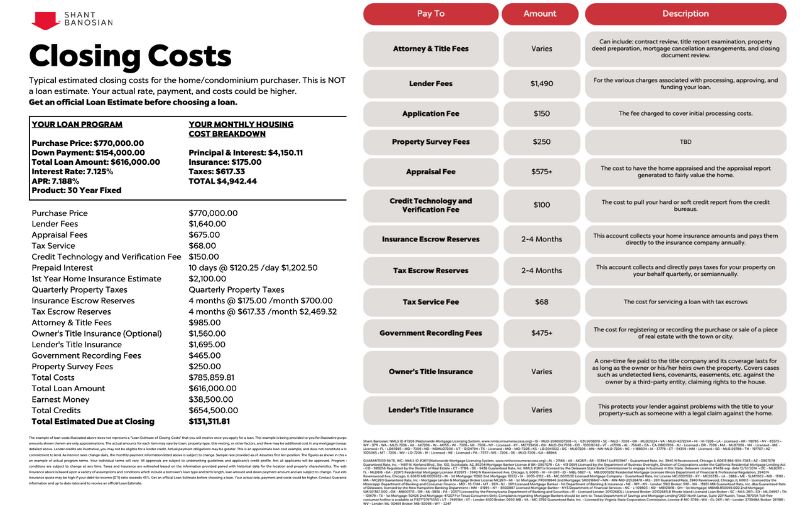
Closing costs are the various fees and prepaid expenses due at the completion of a real estate transaction. In Massachusetts, homebuyers should budget roughly 2% to 5% of the purchase price for closing costs (on top of the down payment). The exact amount will vary based on your loan, the home price, and other factors. Here are typical closing costs for buyers in Massachusetts and what they cover:

      • Loan Origination Fees: If you’re taking a mortgage, the lender may charge origination or underwriting fees for processing the loan. These can include an application fee, credit report fee, tax service fee, and other lender-specific charges. Your Loan Estimate and Closing Disclosure from the lender will detail these.
      • Points (Prepaid Interest): If you chose to pay “points” to buy down your interest rate, those funds will be due at closing as part of your costs. One point equals 1% of the loan amount.
      • Appraisal Fee: Often paid earlier in the process, but if not, the appraisal fee will be collected at closing. This pays the appraiser who evaluated the home’s value for your lender.
      • Home Inspection Fee: This is usually paid at time of inspection, not at closing, so it may not appear on your closing statement. However, if you negotiated for the seller to credit you for inspection findings, that credit would show up on the settlement.
      • Title Insurance and Title Search: Massachusetts closings involve issuance of a lender’s title insurance policy (required if you have a mortgage) and optionally an owner’s title insurance policy (highly recommended to protect your ownership interest). The closing attorney or title company will have performed a title search to ensure clear title, and they facilitate the title insurance. You’ll see charges for title search and title insurance premiums on your closing statement. The buyer typically pays for the lender’s title policy (because it protects the lender) and the one-time premium for an owner’s title policy if you opt to purchase it. Owner’s title insurance is optional but strongly recommended, as it protects you from title issues or liens that could surface later.
      • Attorney Fees or Settlement Fees: The closing attorney’s fee for conducting the closing is usually part of the closing costs. Sometimes the seller pays their own attorney and the buyer pays their attorney or the lender’s attorney – but often in Massachusetts, the buyer covers the standard closing attorney fee, which might be in the range of $1,000 to $1,500 (this can vary) for the legal work and escrow services. This fee will be itemized in the closing statement.
      • Recording Fees: These are fees charged by the Registry of Deeds to record the new deed and mortgage. The buyer generally pays the recording fees for their deed and mortgage documents. These fees aren’t very high (often on the order of a few hundred dollars or less) but will be listed.
      • Prepaid Taxes and Insurance: Be prepared to pay certain prepaid items at closing. This often includes paying property taxes upfront if they are due or if your lender requires you to deposit some taxes into an escrow account. You will also prepay your first year of homeowner’s insurance premium by or at closing (many lenders require proof of insurance and that the first year is paid before closing). Additionally, if your loan has an escrow account for taxes and insurance, the lender may collect an initial deposit at closing (e.g. a few months’ worth of taxes and insurance) to start the escrow balance.
      • Mortgage Insurance Premium: If your loan requires private mortgage insurance (PMI) due to a down payment under 20%, you might pay a prorated first premium or a lump sum at closing, depending on how the PMI is structured. FHA loans also have an upfront mortgage insurance premium due at closing.
      • Survey or Plot Plan Fee: In Massachusetts, a full property survey is not always required, but lenders often require a plot plan or mortgage inspection plan to confirm the house sits on the lot properly. If this was done, the fee may show up as part of closing costs.
      • Other Adjustments: The closing statement will include prorated adjustments between buyer and seller. For example, if the seller has prepaid property taxes beyond the closing date, you’ll reimburse them for the unused portion (shown as a buyer charge, seller credit). Conversely, if there are unpaid taxes or utilities, the seller gives a credit to you. A common adjustment in Massachusetts is for oil in the heating oil tank – if the home uses oil heat, the seller’s oil company will certify the gallons in the tank at closing and the buyer will pay the seller at market rate for that oil (since you’re getting the full tank). These adjustments are typically handled by the closing attorney and listed on the settlement statement.

Tip: A few days before closing, you should receive your finalized Closing Disclosure from the lender which lists all of your closing costs line by line. Review it carefully and ask questions about anything you don’t understand or didn’t expect. There should be no big surprises on closing day, because you have the right to see these figures in advance. If something looks off, have your loan officer or attorney clarify it prior to the closing meeting.

boston smoke inspection

Required Documentation and What to Bring

To avoid any last-minute issues on closing day, make sure you come prepared with all necessary documentation and items. Here’s a checklist of what buyers need to bring or have ready at the closing in Massachusetts:

      • Government-Issued Photo ID: Bring at least one valid, unexpired photo identification (such as a driver’s license or passport). Many lenders now actually ask for two forms of ID – the primary photo ID and a secondary ID (like a Social Security card, credit card, or insurance card). Check with your attorney or lender if a second ID is required. The closing attorney will use your ID to verify your identity for notarizing documents. Important: If your name has recently changed (for example, due to marriage) and does not match the name on the documents, alert your attorney ahead of time. They may require additional proof (such as a marriage certificate) or need to have documents re-drawn in the correct name.
      • Proof of Homeowners Insurance: Massachusetts lenders require that you have a homeowners insurance policy in effect as of closing day. You should arrange this at least a couple of weeks before closing. By closing, you need to bring proof of the insurance (often an insurance binder or policy declarations page and a paid receipt for the first year’s premium). Without proof of insurance, a lender will not allow the closing to proceed, because the home must be insured from day one.
      • Closing Funds (Cashier’s Check or Wire Confirmation): As discussed in the closing costs section, you will need to bring the funds for your down payment and buyer closing costs. If you are wiring funds, confirm with the closing attorney the wire instructions (and always verbally verify to avoid wire fraud scams). Ideally, send the wire the day before or early the morning of closing so that it is confirmed received by the time you sign. If you are bringing a bank or cashier’s check, it should be made out exactly as instructed (for example, to “Law Office of XYZ – IOLTA Account” which is the attorney’s trust account). Bring that check with you. Personal checks are not accepted for large amounts, but you can bring a personal checkbook for small last-minute adjustments as mentioned. Also, if your bank has a daily limit on wire transfers or requires notice for a large withdrawal, take care of that ahead of time – don’t wait until the last minute to arrange your payment.
      • Closing Disclosure and Documents: It’s wise to bring your copy of the Closing Disclosure (the final closing cost statement) that the lender provided, as well as any other important documents or communications (like your loan commitment letter or the Purchase & Sale agreement). While the closing attorney will have the official copies, having your own can be useful to double-check figures or clarify questions.
      • Personal Checks & Miscellaneous Items: As noted, have your checkbook handy for any small unforeseen adjustments. If the closing will involve any special arrangements (for example, an agreement for the seller to escrow funds for a repair, or prepaid fuel adjustments), ensure you have documentation of those agreements. Also, if you were given any certificates or documents ahead of time – such as a smoke detector certificate (which in Massachusetts the seller obtains from the fire department) or final water reading from the town – you might bring evidence of those just in case, though typically the closing attorney will have them. Finally, if you’re really thorough, bring a pen (closings usually have plenty of pens, but some buyers like to use their own special pen to “sign their house”).

By preparing all the required documents and funds ahead of time, you can avoid delays on closing day. Your real estate agent and attorney will usually provide a pre-closing checklist to ensure you have everything in order. Double-check that list the night before closing so you can arrive with confidence that nothing is missing.

boston smoke inspection

Common Closing Day Mistakes to Avoid

Closing day can be complex, and mistakes or last-minute surprises can derail an otherwise smooth transaction. Here are some common mistakes buyers should avoid on or before closing day:

      • Not Reviewing the Closing Disclosure in Advance: One of the biggest mistakes is failing to read the Closing Disclosure (CD) or settlement statement before arriving at the closing. By law, you must receive your CD at least three business days prior to closing. Use that time to go over every charge and compare it to your Loan Estimate. If you wait until the closing to spot an error or question a fee, you could be delaying the process for everyone. Avoid this by scrutinizing the documents in advance and asking questions early. It’s a legal document – what it says matters, and once signed it’s enforceable.
      • Making Major Financial Changes Before Closing: Your lender will re-verify your financial situation just before closing (often a day or two prior). Do not make large purchases, take out new loans, or drastically move money around right before closing. For example, buying a car or new furniture on credit a week before closing could alter your credit profile and jeopardize your mortgage approval. Similarly, changing jobs at the last minute or moving large sums between accounts without documentation could raise red flags. Always consult your loan officer before any significant financial moves during the closing process. The safest bet is to hold off on major purchases or changes until after you’ve closed on your home.
      • Failing to Do (or Thoroughly Do) the Final Walk-Through: Skipping the final walk-through or doing it hurriedly is a mistake that can cost you. Issues discovered after the closing becomes your responsibility, so take the walk-through seriously. We’ve outlined what to check – use that list. If you don’t check that the heat works, for instance, and later find out the furnace is dead, you’ll have little recourse after closing. Protect yourself by doing the walk-through and ensuring any problems are addressed by the seller before you sign the papers.
      • Not Bringing Proper Payment or ID: Imagine reaching the end of the closing only to find you brought a personal check when a wire was required, or you forgot your driver’s license at home. These simple oversights can prevent the closing from happening on time. Always follow the instructions for closing funds (wire or cashier’s check for the correct amount) and double-check that you have your IDs ready the night before. If your spouse or co-borrower is on title or loan, they need to bring their ID too. It can be helpful to make copies of your IDs (front and back) as some attorneys request, but still bring the actual ID. Being unprepared with funds or identification is a common mistake – and an easily avoidable one.
      • Scheduling Conflicts and Rushing: Avoid scheduling anything too tightly on closing day. For instance, trying to close on your house over your lunch break, or having a moving truck arriving at noon for an 11 AM closing, could create stress and problems if there’s any delay. As mentioned, recording can take hours, so schedule movers for later in the day. Likewise, give yourself ample time at the closing meeting. If you rush through signing or feel pressured by other commitments, you might miss something important. Take the day off work if you can, or at least a half-day, so you can focus on the closing.
      • Not Communicating Issues or Questions: If something is bothering you or confusing you on closing day, speak up. Don’t assume any question is stupid – it’s your right to understand every document and every dollar on the statement. Also, if an issue arises (like a last-minute agreement with the seller, or a document error you notice), let all key parties know (agent, attorney, lender) immediately. Keeping everyone in the loop about any changes is crucial; for example, if the seller agreed to a credit for a repair, that must be reflected in the paperwork, which requires communication with the lender and attorney. Lack of communication can lead to mistakes or even legal issues, so be transparent and prompt with any concerns.
      • Wire Transfer Frauds: Unfortunately, wire fraud schemes targeting real estate transactions have become more common. A week or so before closing, you’ll receive wiring instructions from the closing attorney’s office for sending your funds. A big mistake is not verifying these instructions through a trusted channel. Sophisticated hackers have intercepted emails and sent fake wire instructions to buyers. To avoid losing your money to fraud, always call the closing attorney’s office on a known phone number (not one from an email) to confirm the wire details before sending funds. Similarly, never accept last-minute wiring instruction changes by email without voice confirmation. Being vigilant can save you from a devastating error.
      • Assuming the Closing is Finished Before It Is: Until the deed is recorded and funds are disbursed, the closing isn’t truly final. Some buyers make the mistake of celebrating and letting their guard down too early – for example, giving the seller an OK to leave belongings or agreeing to side deals outside of closing. Keep everything official until the closing is 100% complete. Also, don’t lose or damage any documents you receive at closing; keep your copies in a safe place, as you’ll need them for things like tax filing or homestead declarations.
      • Forgetting to Plan Post-Closing Logistics: While not exactly a “closing day” mistake that would stop the closing, many buyers forget to handle important post-closing tasks, which can lead to frustration. Arrange for your utilities to be switched to your name as of closing day, or immediately after. The last thing you want is for the lights to go off because the seller scheduled a disconnect. Also, if you plan to change the locks (a good security practice when moving into a new home), schedule a locksmith for after you have the keys. Massachusetts also allows a homestead protection declaration to secure equity from creditors – some buyers choose to file this at or after closing (consult your attorney). Being proactive on these fronts will make your transition to your new home smoother.

By avoiding these common pitfalls, you can greatly reduce stress and ensure your closing day goes as smoothly as possible. The key is preparation, communication, and attention to detail. Real estate professionals in Massachusetts handle closings every day, so lean on their experience and don’t hesitate to ask for guidance if something is unclear.

boston smoke inspection

✅ Congratulations on Closing Day!

You did it — congratulations on becoming a homeowner! Closing day is no small milestone, and now that the paperwork is signed and the keys are in hand, it’s time to take a deep breath and celebrate. Whether this is your first home or your next chapter, you’ve successfully navigated one of the most important moments in your real estate journey.


Additional Resources and FAQs

What should I expect on closing day in Massachusetts?

Closing day is when you officially take ownership of your new home. You'll review and sign final documents, pay any remaining closing costs, and once everything is signed and recorded, you’ll receive the keys. The process typically takes about an hour and is often held at your attorney’s office or a lender-approved location.

Do I need to bring anything with me to closing?

Yes. Bring a valid government-issued photo ID, proof of homeowners insurance, and a cashier’s check or wire confirmation for your closing funds. It’s also helpful to bring your Closing Disclosure and checkbook in case of small last-minute adjustments.

When do I get the keys to my new home?

You’ll receive the keys once the deed has been recorded at the Registry of Deeds. If your closing happens in the morning, recording usually occurs the same day. Once confirmed, you’ll be given the keys and can officially move in.

What is the final walk-through and why is it important?

The final walk-through is your last chance to ensure the property is in the agreed-upon condition, and I strongly recommend doing it the morning of closing to catch any last-minute issues — like a leaking toilet, broken appliance, or HVAC failure — before ownership officially transfers. Doing it too early can leave you vulnerable to problems that arise between the walkthrough and closing.

What happens if there’s a delay or problem on closing day?

Delays can happen due to funding issues, missing documents, or last-minute walk-through problems. Stay in close contact with your attorney and agent. Most issues can be resolved quickly, but serious problems may require rescheduling the closing or creating a temporary agreement.

Helpful Resources

  ADUS Are a right in MA

ADUs Are Now Legal Statewide

An ADU is Now Legal By Right

  Use realvitalize to sell now and pay later

Have Repairs Done Before You Sell With No Cost

Borrow With No Interest Loan To Have Repairs Done & Pay At Closing

  home selling options

Home Selling Options

With Us You Have Many Options. Learn About Them

  smoke and co requirements

Massachusetts Smoke and CO Requirements

Smoke and Carbon Monoxide Detector Requirements in Massachusetts

  massachusetts smoke detector guide

Read the Massachusetts Guide

Read the Guide to Massachusetts Smoke and Carbon Monoxide Requirements When Selling

What Our Clients Say

Ready for Closing Day? Let’s Make It Seamless

Have questions before or after closing? We’re here to help you finish strong — and support you beyond the final signature.